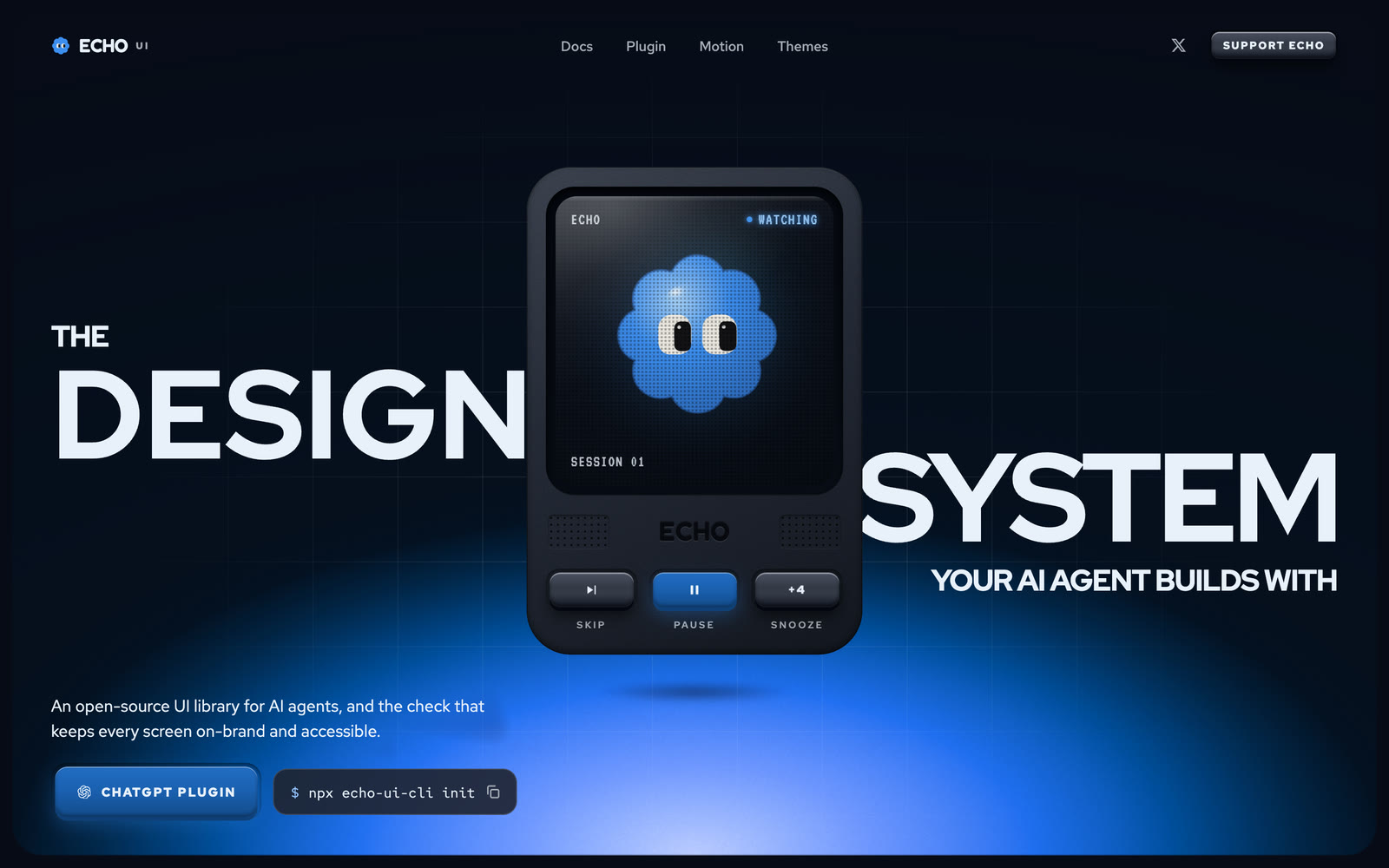
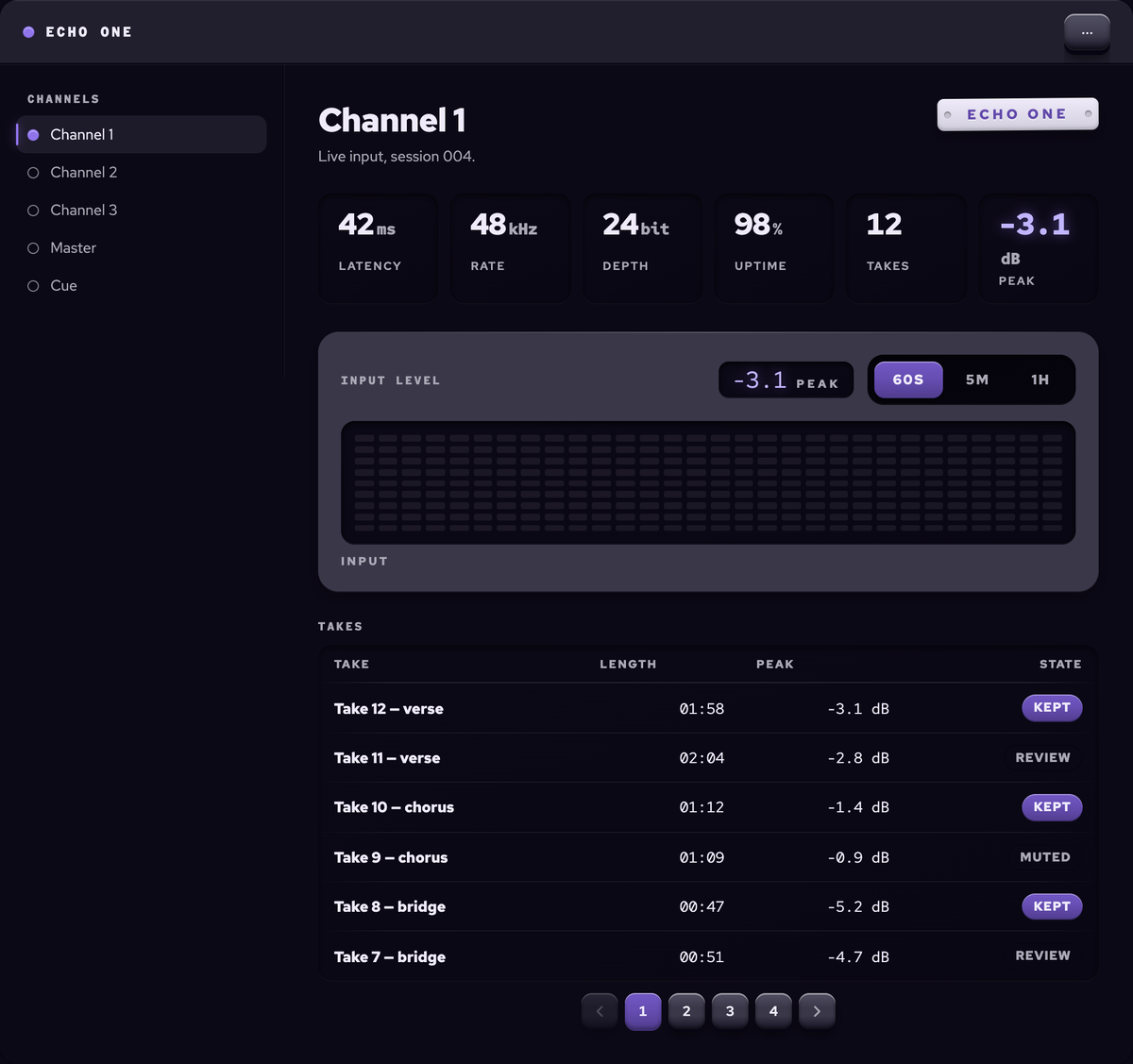
com.echo-ui/mcp is an MCP server that a tactile React component library, and the design system that keeps your AI agent on-brand. Its tool list has not been published yet over http, requires no API key, and scores 60/100 on MCPpedia's security, maintenance and efficiency rubric.
Step 1
Install in your client
Config is the same across clients - only the file and path differ.
CD
Supported in Claude Desktophttp · Node 18+
Paste into ~/Library/Application Support/Claude/claude_desktop_config.json
{
  "mcpServers": {
    "com-echo-ui-mcp": {
      "args": [
        "-y",
        "echo-ui-cli"
      ],
      "command": "npx"
    }
  }
}
Are you the author?
Add this badge to your README to show your security score and help users find safe servers.
Embed in your READMEAbout badges →
[](https://mcppedia.org/s/com-echo-ui-mcp)
Read me
What com.echo-ui/mcp does
A tactile React component library, and the design system that keeps your AI agent on-brand.
Test This Server
This server supports HTTP transport. Be the first to test it - help the community know if it works.
Loading README…
Scored, not listed
Why this score
Five weighted categories - click any category to see the underlying evidence.
Score breakdown
60/100across 5 weighted dimensions
0255075100
23
12
15
10
−40
Security
Maintenance
Efficiency
Documentation
Compatibility
Categoriesclick a row to see evidence
Security
OSV.devNo known CVEs.
Checked echo-ui-cli against OSV.dev.
Community
Reviews
Be the first to review
Have you used this server?
Share your experience - it helps other developers decide.
How easy was setup?Did it work reliably?How was the documentation?
Sign in to write a review.
Frequently Asked Questions
- Is com.echo-ui/mcp safe to use?
- com.echo-ui/mcp has no known CVEs as of the latest MCPpedia security scan. Authentication requirements were not detected automatically - check the project's documentation before connecting in a shared environment. Licensed under MIT.
- How do I install com.echo-ui/mcp?
- com.echo-ui/mcp supports copy-paste install configs on its MCPpedia page for Claude Desktop, Cursor, and Claude Code. Scroll to the Quick Install section and select your client.
- What AI clients work with com.echo-ui/mcp?
- com.echo-ui/mcp is compatible with claude-desktop, cursor, claude-code. It uses http transport.
- Is com.echo-ui/mcp actively maintained?
- com.echo-ui/mcp is actively maintained - last commit was 5 days ago.
Related
Similar servers
Others in ai-ml / design
 Codebase Memory Mcp95
Codebase knowledge graph for AI agents — 162 languages, sub-ms queries, 99% fewer tokens.
48.6k 6
 Gemini Cli95
An open-source AI agent that brings the power of Gemini directly into your terminal.
108.8k 8
 Bla95
🛡️ BLA (Blind LLM Agents) — Adversarial defense shield that protects binaries, Electron apps, JS bundles, Python, and WebAssembly against AI reverse-engineering agents like REA. Poison -> Exhaust -> Hallucinate.
5.4k 1
I
io.github.callstack/agent-device95Open source device layer for AI agents: control mobile, web, TV, and desktop apps over MCP
5.4k 5
MCP Security Weekly
Get CVE alerts and security updates for com.echo-ui/mcp and similar servers.
Community
Discussion
Start a conversation
Ask a question, share a tip, or report an issue.
Has anyone used this with Cursor?How do you handle auth?Any alternatives?
Sign in to join the discussion.