Step 1
Install in your client
Config is the same across clients — only the file and path differ.
CD
Supported in Claude Desktopstdio, sse, http · Node 18+
Paste into ~/Library/Application Support/Claude/claude_desktop_config.json
{
  "mcpServers": {
    "diagrams-mcp": {
      "url": "https://diagrams-mcp-production.up.railway.app/mcp"
    }
  }
}
Are you the author?
Add this badge to your README to show your security score and help users find safe servers.
Embed in your READMEAbout badges →
[](https://mcppedia.org/s/io-github-mskry-diagrams-mcp-server)
Read me
What io.github.mskry/diagrams-mcp-server does
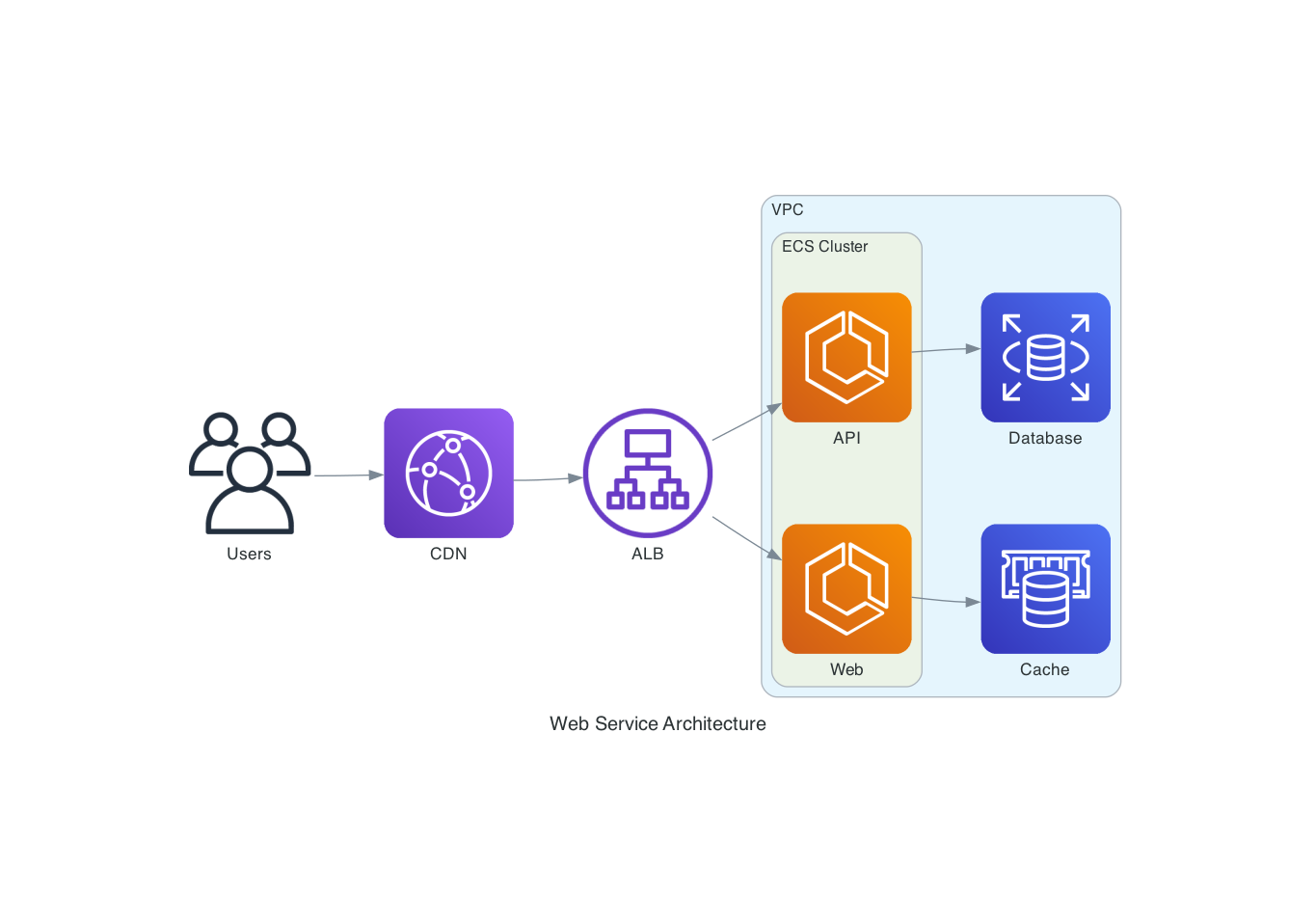
MCP server for generating cloud architecture diagrams, flowcharts, sequence diagrams, and more — powered by three rendering engines: mingrammer/diagrams, Mermaid, and PlantUML.
Test This Server
Run this in your terminal to verify the server starts. Then let us know if it worked — your result helps other developers.
npx -y '@mermaid-js/mermaid-cli' 2>&1 | head -1 && echo "✓ Server started successfully"
After testing, let us know if it worked:
Loading README…
Scored, not listed
Why this score
Five weighted categories — click any category to see the underlying evidence.
Score breakdown
51/100across 5 weighted dimensions
0255075100
19
15
10
−49
Security
Maintenance
Efficiency
Documentation
Compatibility
Categoriesclick a row to see evidence
Security
OSV.devNo known CVEs.
Checked @mermaid-js/mermaid-cli against OSV.dev.
Community
Reviews
Be the first to review
Have you used this server?
Share your experience — it helps other developers decide.
How easy was setup?Did it work reliably?How was the documentation?
Sign in to write a review.
Frequently Asked Questions
- Is io.github.mskry/diagrams-mcp-server safe to use?
- io.github.mskry/diagrams-mcp-server has no known CVEs as of the latest MCPpedia security scan. It does not require authentication, so any local process can connect — keep this in mind in shared environments.
- How do I install io.github.mskry/diagrams-mcp-server?
- io.github.mskry/diagrams-mcp-server supports copy-paste install configs on its MCPpedia page for Claude Desktop, Cursor, and Claude Code. Scroll to the Quick Install section and select your client.
- What AI clients work with io.github.mskry/diagrams-mcp-server?
- io.github.mskry/diagrams-mcp-server is compatible with claude-desktop, cursor, claude-code. It uses stdio and sse and http transport.
- Is io.github.mskry/diagrams-mcp-server actively maintained?
- io.github.mskry/diagrams-mcp-server is actively maintained — last commit was 28 days ago. It has 3 GitHub stars.
Related
Similar servers
Others in design
 Shadcn Ui Mcp Server90
A mcp server to allow LLMS gain context about shadcn ui component structure,usage and installation,compaitable with react,svelte 5,vue & React Native
2.8k 5
I
Image MCP Server90AI image generation and editing with prompt optimization and quality presets. Powered by Nano Banana
131 2
I
io.github.HaD0Yun/gopeak90GoPeak — The most comprehensive MCP server for Godot Engine. 95+ tools, LSP, DAP, screenshots.
225 4
 MeiGen AI Design MCP89
MeiGen-AI-Design-MCP — Turn Claude Code / OpenClaw into your local Lovart. Local ComfyUI, 1,400+ prompt library, multi-direction parallel generation.
1.5k 6
MCP Security Weekly
Get CVE alerts and security updates for io.github.mskry/diagrams-mcp-server and similar servers.
Community
Discussion
Start a conversation
Ask a question, share a tip, or report an issue.
Has anyone used this with Cursor?How do you handle auth?Any alternatives?
Sign in to join the discussion.