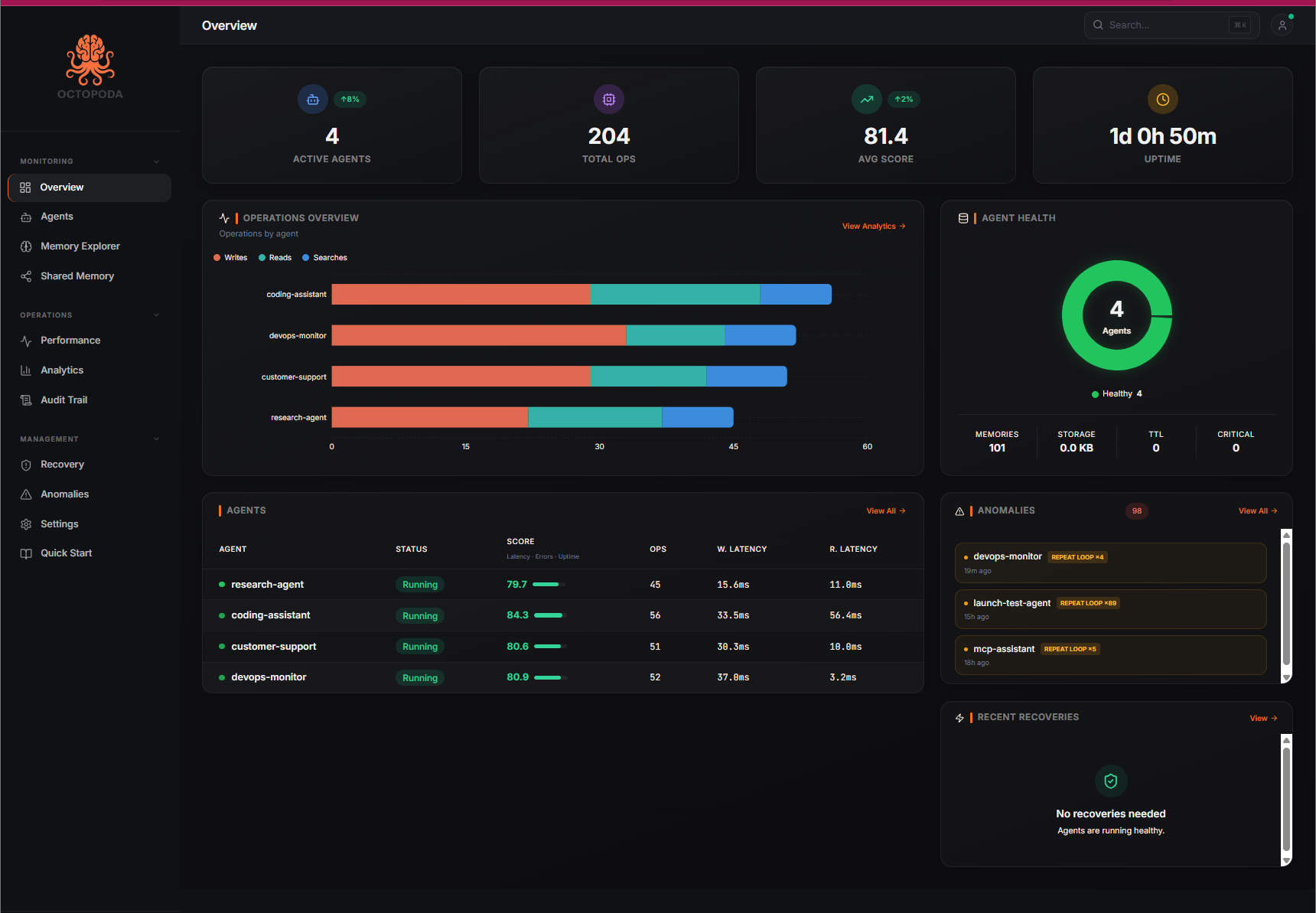
The open-source memory operating system for AI agents. Persistent memory, semantic search, loop detection, agent messaging, crash recovery, and real-time observability.
{
"mcpServers": {
"octopoda-os": {
"command": "<see-readme>",
"args": []
}
}
}No install config available. Check the server's README for setup instructions.
Are you the author?
Add this badge to your README to show your security score and help users find safe servers.
The open-source memory operating system for AI agents. Persistent memory, semantic search, loop detection, agent messaging, crash recovery, and real-time observability.
Is it safe?
No package registry to scan.
No authentication — any process on your machine can connect.
License not specified.
Is it maintained?
Last commit 1 days ago. 80 stars.
Will it work with my client?
Transport: stdio. Works with Claude Desktop, Cursor, Claude Code, and most MCP clients.
No automated test available for this server. Check the GitHub README for setup instructions.
No known vulnerabilities.
This server is missing a description. Tools and install config are also missing.If you've used it, help the community.
Add informationHave you used this server?
Share your experience — it helps other developers decide.
Sign in to write a review.
Dynamic problem-solving through sequential thought chains
Production ready MCP server with real-time search, extract, map & crawl.
A Model Context Protocol server for searching and analyzing arXiv papers
Web and local search using Brave Search API
MCP Security Weekly
Get CVE alerts and security updates for Octopoda OS and similar servers.
Start a conversation
Ask a question, share a tip, or report an issue.
Sign in to join the discussion.
Give your agents persistent memory, loop detection, audit trails, and real-time observability. Everything works automatically once you create an agent.

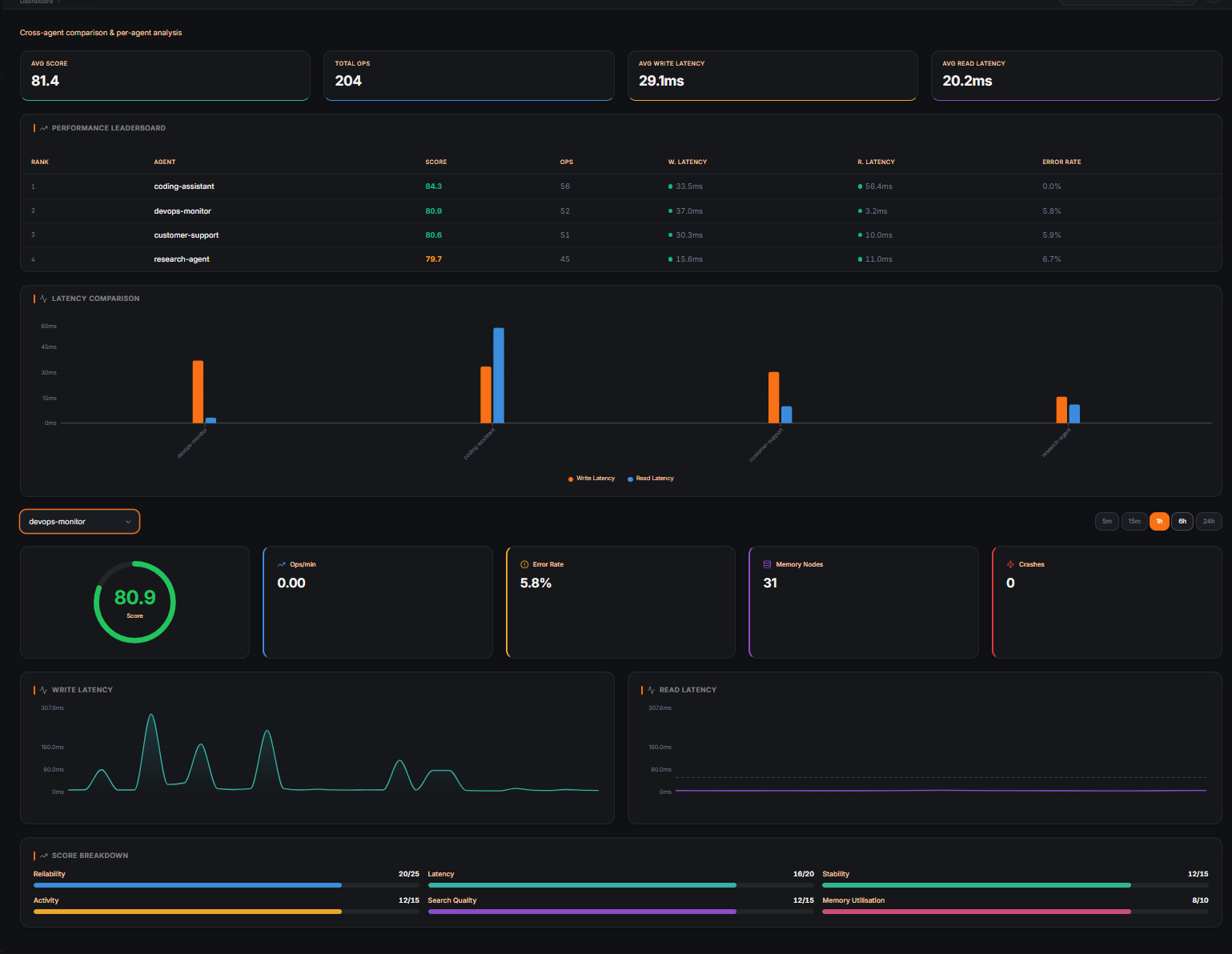
Track latency, error rates, memory usage, and health scores per agent.

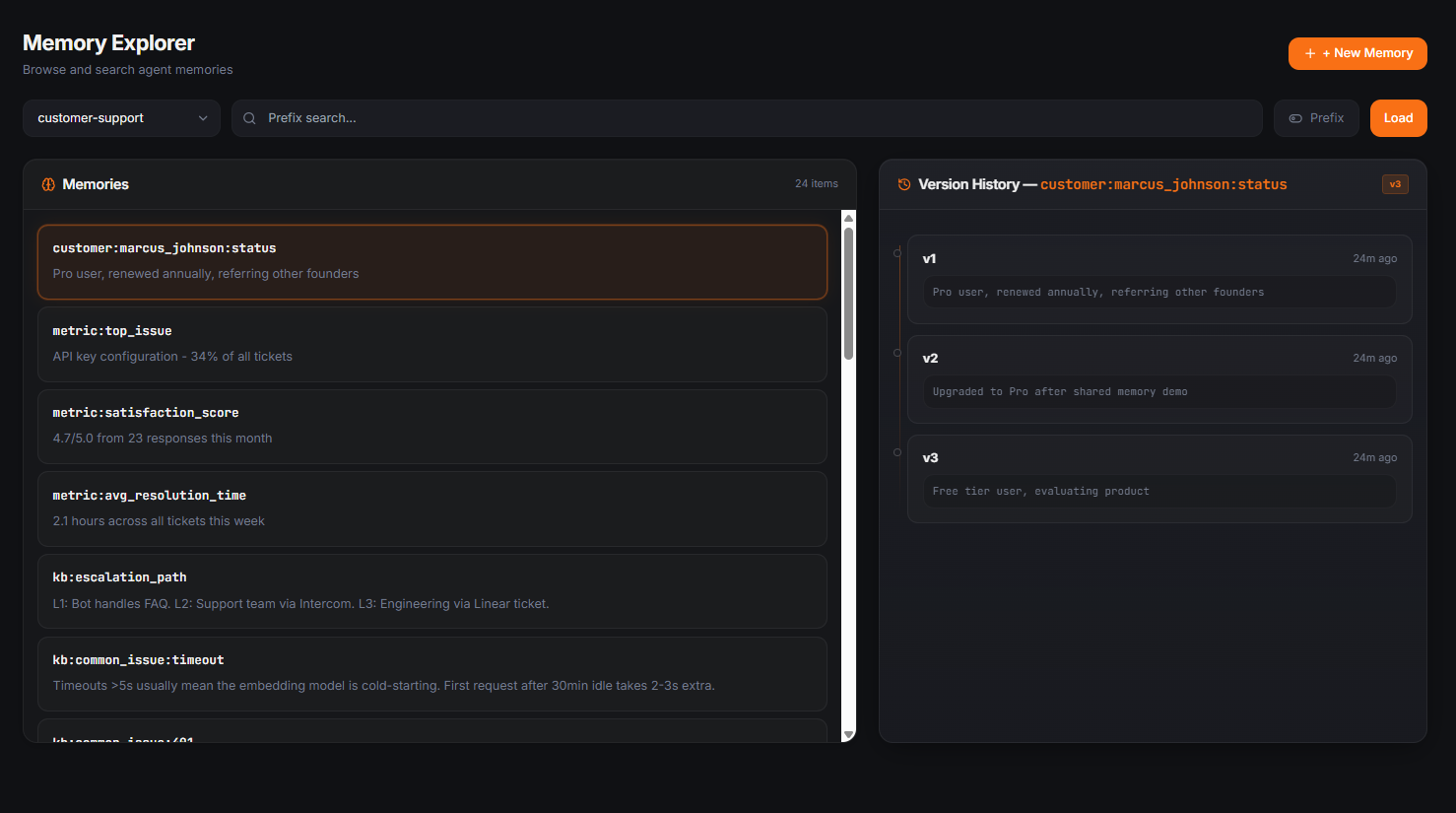
Browse every memory, inspect version history, and see exactly how an agent's knowledge changed over time.

pip install octopoda
from octopoda import AgentRuntime
agent = AgentRuntime("my_agent")
That's it. Your agent now has persistent memory, loop detection, crash recovery, and an audit trail. Everything runs automatically in the background. Memory survives restarts, crashes, and deployments.
Store and retrieve memories when you need to:
agent.remember("key", "value")
agent.recall("key")
Want the dashboard? Run the server:
pip install octopoda[server]
octopoda
Open http://localhost:7842 — same dashboard as the cloud version, running against your local data. No account needed.
Want cloud sync across machines? Sign up free at octopodas.com, set your API key, and your agents sync to the cloud automatically:
export OCTOPODA_API_KEY=sk-octopoda-...
Same code, same dashboard — now backed by PostgreSQL with multi-device sync and team access.
| | Local | Cloud |
|---|---|---|
| Setup | pip install octopoda | Sign up at octopodas.com |
| Storage | SQLite on your machine | PostgreSQL + pgvector |
| Dashboard | http://localhost:7842 | octopodas.com/dashboard |
| Account needed | No | Yes (free) |
| Data stays on your machine | Yes | Stored on cloud |
| Multi-device sync | No | Yes |
| Semantic search | Needs octopoda[ai] extra | Built-in |
| Upgrade path | Set OCTOPODA_API_KEY | Already there |
Start local, upgrade to cloud when you need sync or team access. Both use the same API, same dashboard design, same code.
When you create an AgentRuntime, all of this is handled for you automatically:
You don't need to configure any of this. It just works.
Everything below is optional. Use it when you need it.
Find memories by meaning, not just exact keys.
agent.remember("bio", "Alice is a vegetarian living in London")
results = agent.recall_similar("what does the user eat?")
# Returns the right memory with a similarity score
Agents can talk to each other through shared inboxes.
agent_a.send_message("agent_b", "Found a bug in auth", message_type="alert")
messages = agent_b.read_messages(unread_only=True)
Set goals and track progress. Integrates with drift detection.
agent.set_goal("Migr
... [View full README on GitHub](https://github.com/RyjoxTechnologies/Octopoda-OS#readme)