Step 1
Install in your client
Config is the same across clients — only the file and path differ.
CD
Supported in Claude Desktopstdio, sse · Node 18+
Paste into ~/Library/Application Support/Claude/claude_desktop_config.json
{
  "mcpServers": {
    "proxmoxmcp-plus": {
      "args": [
        "proxmox-mcp-plus"
      ],
      "command": "uvx"
    }
  }
}
Are you the author?
Add this badge to your README to show your security score and help users find safe servers.
Embed in your READMEAbout badges →
[](https://mcppedia.org/s/proxmoxmcp-plus)
Read me
What ProxmoxMCP Plus does
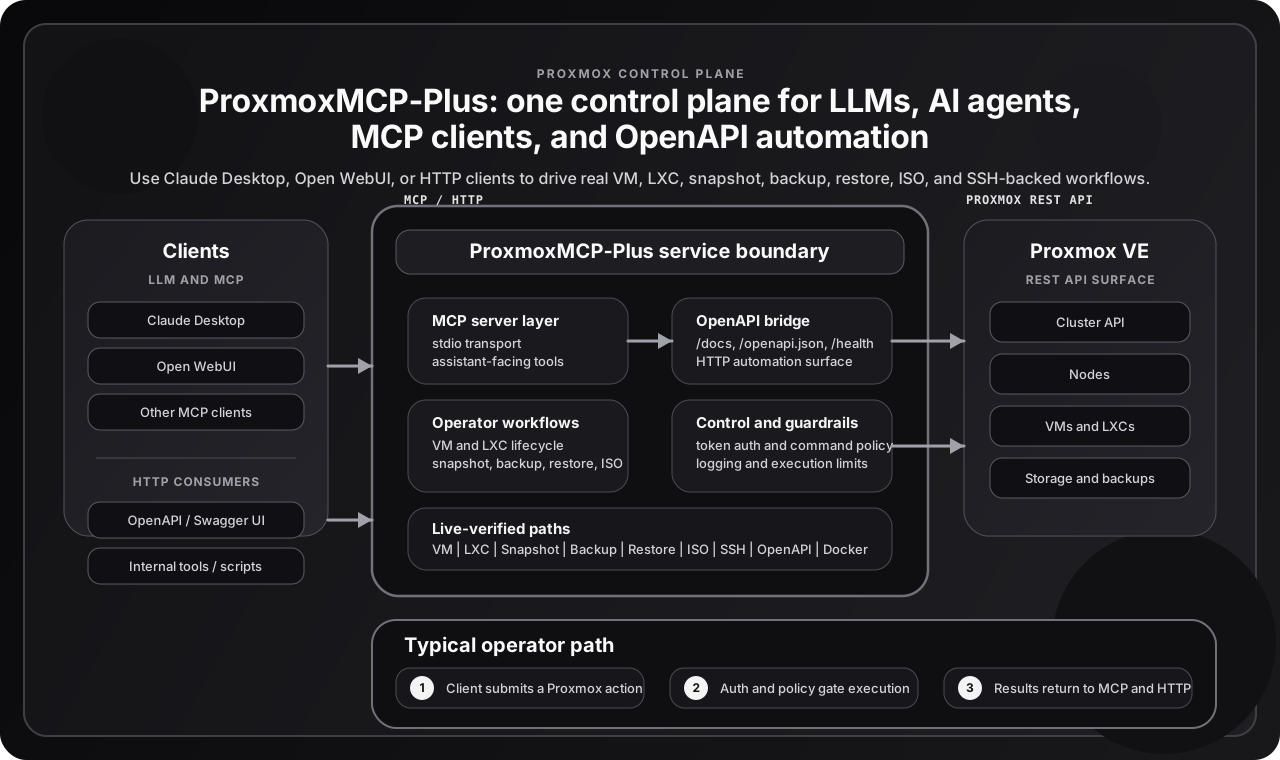
Enhanced Proxmox MCP server with advanced virtualization management and full OpenAPI integration.
Test This Server
Run this in your terminal to verify the server starts. Then let us know if it worked — your result helps other developers.
uvx 'proxmox-mcp-plus' 2>&1 | head -1 && echo "✓ Server started successfully"
After testing, let us know if it worked:
Loading README…
Scored, not listed
Why this score
Five weighted categories — click any category to see the underlying evidence.
Score breakdown
60/100across 5 weighted dimensions
0255075100
23
15
12
10
−40
Security
Maintenance
Efficiency
Documentation
Compatibility
Categoriesclick a row to see evidence
Security
OSV.devNo known CVEs.
Checked proxmox-mcp-plus against OSV.dev.
Help improve this page
This server is missing a description. Tools and install config are also missing.If you've used it, help the community.
Add informationCommunity
Reviews
Be the first to review
Have you used this server?
Share your experience — it helps other developers decide.
How easy was setup?Did it work reliably?How was the documentation?
Sign in to write a review.
Frequently Asked Questions
- Is ProxmoxMCP Plus safe to use?
- ProxmoxMCP Plus has no known CVEs as of the latest MCPpedia security scan. It does not require authentication, so any local process can connect — keep this in mind in shared environments. Licensed under MIT.
- How do I install ProxmoxMCP Plus?
- ProxmoxMCP Plus supports copy-paste install configs on its MCPpedia page for Claude Desktop, Cursor, and Claude Code. Scroll to the Quick Install section and select your client.
- What AI clients work with ProxmoxMCP Plus?
- ProxmoxMCP Plus is compatible with claude-desktop, cursor, claude-code. It uses stdio and sse transport.
- Is ProxmoxMCP Plus actively maintained?
- ProxmoxMCP Plus is actively maintained — last commit was 2 days ago. It has 215 GitHub stars.
Related
Similar servers
Others in devops
G
Mcp Gitlab96MCP server for using the GitLab API
1.6k 12
 Mcp Gitlab Server92
Enhanced MCP server for GitLab: group projects listing and activity tracking
51 2
 Alibabacloud Devops Mcp Server92
Yunxiao MCP Server provides AI assistants with the ability to interact with the Yunxiao platform. It provides a set of tools that interact with Yunxiao's API, allowing AI assistants to manage Codeup repository, Project, Pipeline, Packages etc.
116 7
K
Komodo MCP Server91MCP server for Komodo - manage Docker containers, servers, stacks, and deployments via AI
7 11
MCP Security Weekly
Get CVE alerts and security updates for ProxmoxMCP Plus and similar servers.
Community
Discussion
Start a conversation
Ask a question, share a tip, or report an issue.
Has anyone used this with Cursor?How do you handle auth?Any alternatives?
Sign in to join the discussion.